Gathering in Mashhad addresses continuity of leadership and religious governance

Senior Iranian officials used the 27th night of public mourning ceremonies in Mashhad to stress institutional continuity, national resilience, and competing views of religion’s role in public administration.
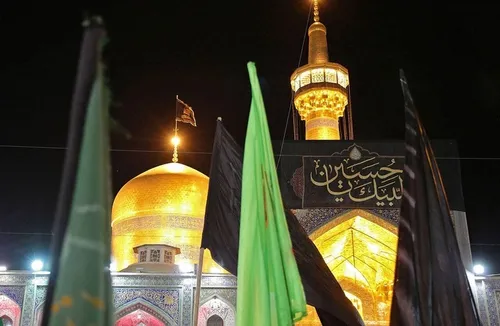
Senior Iranian officials addressed a crowd in Mashhad, northeast Iran, late Thursday, marking the 27th night of public mourning ceremonies with messages centered on governance, stability, and interpretations of faith in civic life.
The event, held in Shariati Square near Imam Reza Shrine, opened with remarks from Iran’s Vice President Saqab Esfahani.
He offered condolences for the recent assassination of Ayat. Seyyed Ali Khamenei, late Leader of the Islamic Revolution, and several senior officials.
Esfahani pointed to the national resilience and power and the hollowed threats by the enemy in the Persian Gulf, stressing: “Iran’s march to victory is unstoppable by martyrdom of the commanders”.
He described the national mood as a mix of grief and determination, adding that national institutions are structured to function beyond any single individual.
Esfahani also connected the present period to earlier phases of development after the 1979 Revolution.
He argued that technological and military progress has often continued despite leadership transitions, saying: “They imagined Iran’s missile capability would go out with martyr Tehrani Moghaddam’s martyrdom; however, our deterrence power has grown by several folds”.
Talking about Iran’s power structure difference with that of the enemy, the official stated: “Based on the martyred Leader’s plan, our power structure does not hinge upon an individual, and any martyred commander will be quickly replaced with another true follower of this school of thought, who holds a sacred grudge towards the enemy”.
He referenced geopolitical tensions in the Persian Gulf, saying: “Disputes linked to the Strait of Hormuz continue to affect international economic stability”.
“Remember, Great Britain forced Paris Pact unto Iran that entailed separation of Herat from the country; yet, today, not our military might, not the governance, and not the Iranian nation, resembles that period”, the Vice President emphasized.
He continued: “Our commanders today have gotten the economy of the enemy and its allies in a stranglehold at the Strait of Hormuz today”.
Saqab Esfahani warned the countries that allow their territories to be used by the US, stressing: “The strategic centres like Fojairah and Yanba’ ports and Dimona Atomic site can be torn down in a second if we decide so”.
He also alluded to comments by U.S. President Donald Trump, and stressed: “Iran’s direction is shaped primarily through domestic public participation”.
Elsewhere, Ayat. Alami, a member of the Assembly of Experts, followed with remarks focusing on public turnout during the mourning period.
Alami characterized the crowds as a sign of social steadfastness amid regional pressure.
“Foreign efforts to influence domestic affairs have appeared in earlier political episodes”, he warned, adding that policymakers should avoid choices that could deepen instability.
Alami also described the recent leadership transition after Ayat. Khamenei’s assassination as a matter handled through the Assembly of Experts’ constitutional responsibilities, adding, “Public expectations remain centered on consistent governance”.
The final address came from Hoj. Hamidreza Kamel‑Navab, secretary of a governance research circle at Feqahat Seminary School.
Kamel‑Navab delivered a theoretical discussion on the relationship between religion and public administration.
“Arguments separating religion from politics reflect historical colonial dynamics in the region”, he argued.
He cited classical religious examples to support the view that faith traditions historically engaged with community organization.
He concluded by urging continued study of governance-related classical sources and their application to contemporary questions.
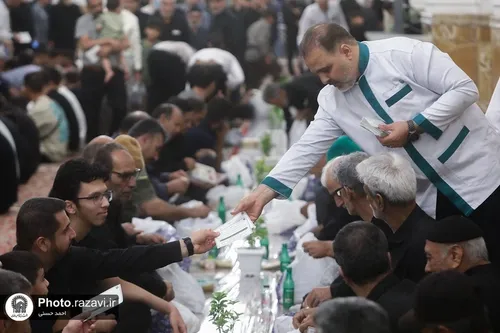
Crowds remained in the square after the speeches while organizers thanked attendees for sustained participation throughout the extended mourning period.
Related News



Post comments
- Editor's suggestion
- Latest news
IRIU, Ministry of Foreign Affairs forge scientific diplomacy ties
Future diplomats tour Imam Reza Shrine
Iraqi students visit Imam Reza Shrine
Razavi University, al-Mustafa International University launch joint cooperation center
Malek Museum unveils exhibition on devotion to Prophet Muhammad
Khorasan Razavi MPs support AQR development plans for Imam Reza Shrine
AQR research deputies strengthen international synergy
Darvazeh Bathhouse reflects Safavid-era history in Mashhad: Expert
Sunni influencer recalls shattered stereotypes during visit to Imam Reza Shrine
International Islamic Unity Conference continues strategic vision of Iran’s leaders
Iran is a unique model of peaceful coexistence: Muslim activist
Imam Reza Shrine plays pivotal role in Islamic unity: Bahraini scholar
40th Islamic Unity Conference concludes in Mashhad
40th Islamic Unity Conference concludes in Mashhad
Imam Reza Shrine adorned for birth anniv. of Prophet, Imam Sadiq
Arab pilgrims honor birth anniv. of Prophet, Imam Sadiq
Afghan collector donates rare stamps to AQR
Imam Reza Intl. University, Razavi University expand international cooperation
AQR Custodian meets martyr Larijani's family members
Intl. landscape design and memorial space competition for Shajareh Tayyebeh School martyrs' cemetery
Dust-cleaning ceremony held at Imam Reza Shrine
Campaigns